
Route plannerESEN

El Boliche

High-altitude station beside Cotopaxi National Park

1 route

Routes that ran through

Stop

Terminus (Train of the Volcanoes)

3,484 m

Altitude

Cotopaxi

Province

El Boliche station

The El Boliche station is the terminus of the Train of the Volcanoes, on the border between Cotopaxi and Pichincha, at 3,484 m above sea level, which makes it one of the highest stations in the entire network. It is located beside Cotopaxi National Park and the El Boliche National Recreation Area.

El Boliche stands out for its pine forest, its trails and its páramo air, with privileged views of the imposing Cotopaxi volcano and Rumiñahui. It was the high point of the Train of the Volcanoes, a scenic half-day journey from Quito designed to enjoy the “Avenue of the Volcanoes” described by Alexander von Humboldt.
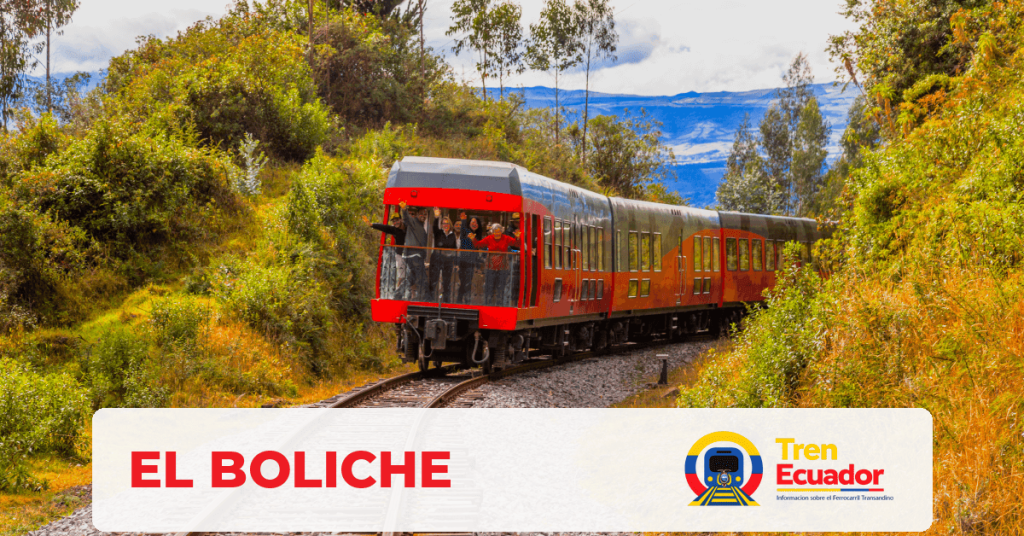
Estación de tren de El Boliche, Ferrocarril Transandino del Ecuador
El Boliche stationEl Boliche, Cotopaxi · 3,484 m a.s.l.
Altitude3,484 m
RoutesVolcanoes
PositionTerminus (Train of the Volcanoes)
Coordinates0.6090° S, 78.5560° W

Where is El Boliche station?

El Boliche station is located in El Boliche, Cotopaxi. Coordinates: 0.6090° S, 78.5560° W.

What to see and do nearby

Points of interest a short distance from El Boliche.

El Boliche Recreation AreaPine forest with trails, lookouts and a picnic area.Next to the station
Cotopaxi VolcanoOne of the highest active volcanoes in the world (5,897 m).15 km
Rumiñahui VolcanoPeak next to Cotopaxi, visible from the station.12 km
Forest trailsPaths among the pines and páramo of the Recreation Area.In the park
Cotopaxi lookoutPanoramic spot towards the snow-capped peak on clear days.Surroundings
Andean páramoTussock grass and high-altitude flora of Cotopaxi National Park.Surroundings

Other stations on the Train of the Volcanoes

Train of the Volcanoes

El BolicheTerminal

Station facilities

There is no official, up-to-date list of facilities for each station. Most of these stations have had no train since 2020; at those on the two stretches that run (Alausí–Sibambe and Ibarra–Andrade Marín), facilities depend on the operator of each stretch.

Historic Trans-Andean Railway station
Ticket office, toilets and other services: only on the stretches that run, and as each operator provides

Connections from El Boliche

Train of the Volcanoes — Quito (Chimbacalle) ↔ El Boliche · service suspended. Days: Historically weekends and public holidays.

Getting there. El Boliche is linked by road to nearby towns.

Plan your journey — use our route planner to see which route connects El Boliche with other stations.

Please note. Ecuador's national railway service has been suspended since 2020 (Ferrocarriles del Ecuador, FEEP, in liquidation). Two stretches are running today: the Devil's Nose (Alausí–Sibambe), back in service on 6 June 2026 after February's landslide, and the Tren Tayta Imbabura (Ibarra–Andrade Marín), running since April 2025. The other routes, schedules and fares on this site are historical, for information and heritage purposes and subject to change. Always confirm availability before planning a trip.
🔖

Bookmark this Trans-Andean Railway guide

We update trenecuador.org as soon as there is news: route reopenings, schedules and fares for the segments still running, and updates on Ecuador's railway heritage. Save it and come back before planning your train trip.

Frequently asked questions

El Boliche was the terminus of the Train of the Volcanoes, the scenic half-day journey from Chimbacalle.
The El Boliche National Recreation Area, with pine forest and trails, next to Cotopaxi National Park.
No. The Train of the Volcanoes has been suspended since 2020. The recreation area can be visited by road from the Pan-American Highway.
The Train of the Volcanoes ran through this station. Check the days and prices on the schedule and fares pages.
No. The national service has been suspended since 2020 and no train calls at this station today. Only two services run: the Devil’s Nose (Alausí–Sibambe, Thursday to Sunday) and the Tren Tayta Imbabura (Ibarra–Andrade Marín, Wednesday to Sunday). The information on this page is historical and heritage-related.

Índice de contenidos