
Alausí
Heritage town and gateway to the Devil’s Nose
2 routes
Routes that ran through
Stop
Terminus of the Devil’s Nose · Tren Crucero stop
2.345 m
Altitude
Chimborazo
Province
Alausí station
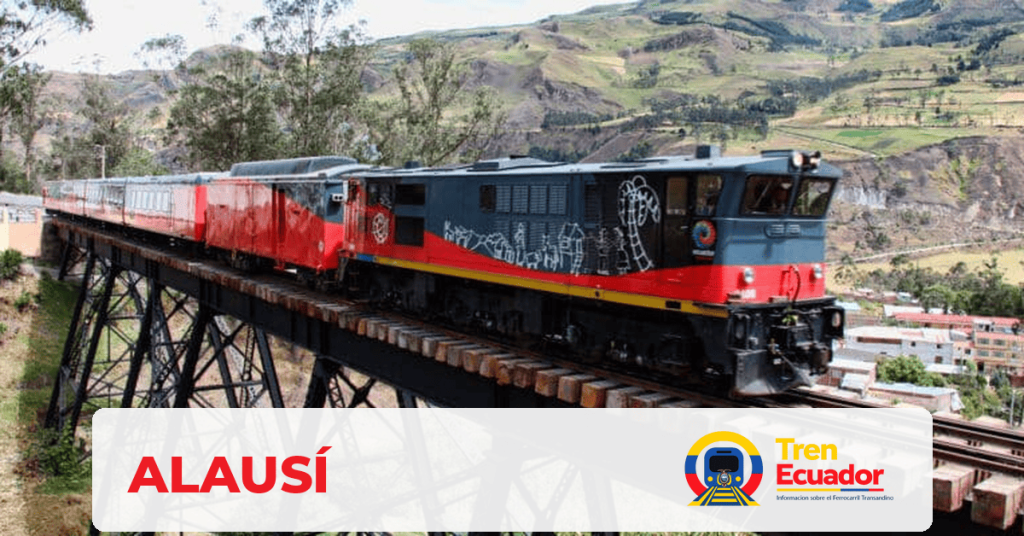
The Alausí station is, together with Sibambe, the most emblematic section and the only one currently operating in Ecuador. It is in the heritage town of Alausí (Chimborazo), at 2,345 m above sea level, on Eloy Alfaro street. It is the terminus of the legendary Devil’s Nose route and was also a stop on the Tren Crucero.
Alausí preserves colourful republican houses, cobbled streets and a lookout with the statue of San Pedro de Alausí atop the Lluglli hill. From here departs the train that descends the famous Devil’s Nose (Nariz del Diablo) zigzag, one of the boldest railway engineering works in the world, carved into an almost vertical wall of rock.
Where is Alausí station?
Alausí station is located in Alausí, Chimborazo. Coordinates: 2.2014° S, 78.8464° W.
What to see and do nearby
Points of interest a short distance from Alausí.
Other stations on the Tren Crucero
Tren Crucero
Station facilities
The stations of the Trans-Andean Railway preserve their historic architecture, with a ticket office, waiting room and platform. Here is what you will find at this station.
Connections from Alausí
Tren Crucero — Quito (Chimbacalle) ↔ Durán (Guayaquil) · service suspended. Days: Scheduled departures (high season), in both directions.
Devil’s Nose (Nariz del Diablo) — Alausí ↔ Sibambe (Chimborazo) · currently running. Days: Thursday to Sunday and public holidays.
Interchange station. Several railway routes met here (Tren Crucero, Devil’s Nose (Nariz del Diablo)), making it an important point on the network.
Getting there. Alausí is linked by road to nearby towns; outside the station you will find taxis and public transport.
Plan your journey — use our route planner to see which route connects Alausí with other stations.
Bookmark this Trans-Andean Railway guide
We update trenecuador.org as soon as there is news: route reopenings, schedules and fares for the segments still running, and updates on Ecuador's railway heritage. Save it and come back before planning your train trip.